
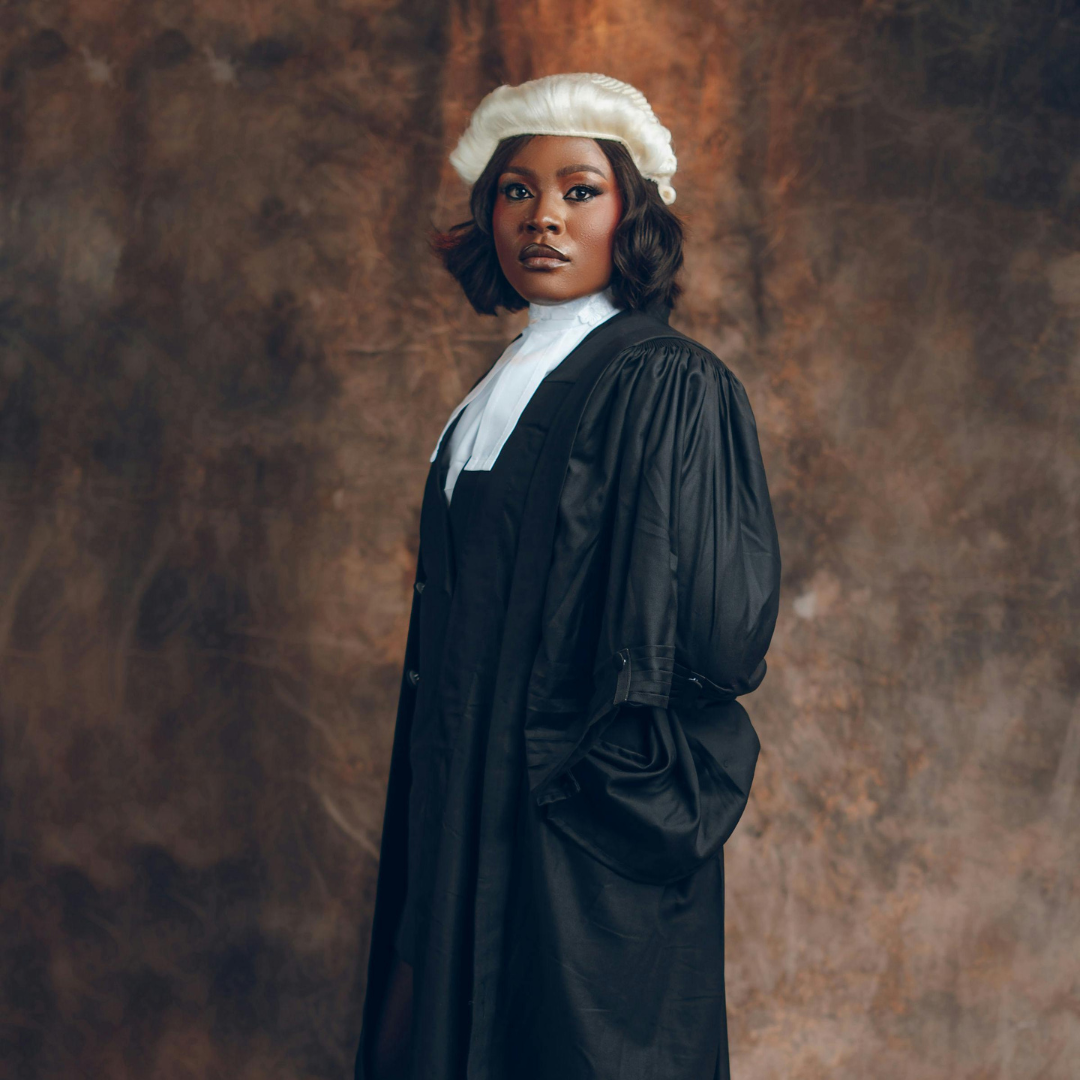
Black History Month provides an essential space for all of us to reflect on the experiences and achievements of Black men and women that have too often been relegated to footnotes in our nation’s story.
The legal profession, historically one of the most exclusive institutions in British society, has been fundamentally transformed by pioneering Black legal professionals whose achievements created change that many believed would never come to pass.
These stories deserve recognition as central to our shared history, not as optional additions. The Black men and women we celebrate today dismantled barriers, challenged injustice, and created pathways for generations who followed.
This Black History Month, we at Tann Law Solicitors would like to share the stories of some remarkable individuals whose courage and determination shaped the legal profession we know today; each one demonstrates the extraordinary impact of those who refused to accept that the doors of justice should remain closed.
Christian Frederick Cole: Breaking the First Barrier
Christian Frederick Cole’s achievement in becoming the first Black African barrister to practise in English courts stands as a testament to resilience in the face of seemingly insurmountable obstacles.
Born in Sierra Leone in 1852, Cole arrived at Oxford University during the height of British imperial power.
The discrimination Cole faced was both overt and insidious. Press cartoons depicted him with grotesque racial stereotypes, and his presence at Oxford drew mockery alongside curiosity. Yet, Cole maintained high visibility in college life, speaking at the Oxford Union and refusing to shrink from these spaces.
Cole studied classics at Oxford, a highly competitive and intellectually demanding degree that even some of his privileged contemporaries failed to secure.
His time in academia was marked by constant financial struggle. When his uncle could no longer provide support, Cole tutored white British students in their examinations and took music teaching positions to fund his studies. Despite these challenges, fellow students and the Master of University College recognised his ability and character, raising funds to help him continue.
In 1876, Cole graduated from Oxford, and after a brief return to Sierra Leone. There, employment proved elusive, so he returned to England to pursue his true calling. In 1883, he was called to the Bar by Inner Temple, becoming the first Black African to achieve this distinction.
Cole’s legacy extends beyond his courtroom work. He published powerful anti-colonial writings, including his critique of the Anglo-Zulu War, in which he challenged British imperialism at its very peak. His words were brave and uncompromising, demonstrating his will to use his position to challenge injustice rather than simply seeking acceptance within unjust systems.
Tragically, Cole died of smallpox in 1885 at just 33 years old. In 2017, University College Oxford finally honoured his memory with a commemorative plaque, ensuring that his pioneering achievement will not be forgotten.
Stella Thomas: West Africa’s Legal Pioneer
Born in Lagos, Nigeria, in 1906, Thomas became the first Black African woman called to the Bar in Great Britain in 1933, at a time when both her race and gender presented formidable obstacles to legal practice. However, despite facing the intersection of racial and gender discrimination, Thomas refused to moderate her voice or compromise her principles.
Thomas studied law at Oxford and joined Middle Temple, eventually becoming a founding member of the League of Coloured Peoples, a multi-racial civil rights organisation that worked to advance the rights of African, Asian and Caribbean minorities throughout Britain and the Commonwealth.
In 1934, Thomas publicly challenged prominent historian Margery Perham and addressed former Governor of Nigeria Lord Lugard, criticising imperial approaches that excluded African voices from decisions affecting African peoples.
After practising briefly in the UK, Thomas returned to West Africa, where she established her own law firm in Lagos in 1935. Her practice handled criminal cases, family matters, and a wide range of legal issues, serving her community while building an institution that would outlast her. In 1943, she became West Africa’s first female magistrate, serving in that capacity until her retirement in 1971.
Thomas advanced not only her own career; she built institutions, challenged systems, and created space for the voices of those who had been silenced to finally be heard.
Dame Linda Dobbs: Breaking the Judicial Barrier
The year 2004 marked a watershed moment in British legal history when Dame Linda Dobbs became the first Black person appointed to the senior judiciary of England and Wales.
After studying Russian and law at the University of Surrey and completing a doctorate in Soviet criminology at the London School of Economics, Dobbs was called to the Bar in 1981. She built her practice in fraud and professional disciplinary tribunals, gaining experience that would prove invaluable throughout her career.
In 2003, Dobbs became the first Black person to chair the Criminal Bar Association, using that platform to establish its first Equality and Diversity sub-committee. Her appointment to the High Court in 2004 came without the traditional stepping stones of recorder or deputy judge positions.
Throughout her judicial service, Dame Linda served as Senior Liaison Judge for Diversity and chaired numerous committees focused on international legal cooperation and judicial training. Upon her appointment, she stated, “I am confident I am the first of many to come.”
Since her voluntary early retirement in 2013, Dame Linda has dedicated herself to training judges and lawyers internationally, particularly in the Caribbean and Africa.
Courtenay Griffiths KC: The Formidable Advocate
When Courtenay Griffiths KC passed away in June 2025 at the age of 69, the legal profession mourned the loss of one of its most formidable advocates.
Born in Kingston, Jamaica, in 1955, Griffiths arrived in the UK at age six as part of the Windrush generation.
Inspired by his father’s stories of Norman Manley QC, Jamaica’s first Prime Minister, Griffiths pursued law with determination. Called to the Bar in 1980, he became one of the first Black lawyers to take silk when he was appointed Queen’s Counsel in 1998.
Griffiths’s career encompassed some of the most high-profile and complex criminal cases in modern British legal history. He represented defendants in the Brighton bombing trial, the Keith Blakelock murder trial arising from the Broadwater Farm riot, and the first Damilola Taylor murder trial. His practice extended internationally, notably defending former Liberian president Charles Taylor in war crimes proceedings at The Hague.
Known for his incredible cross-examination skills and formidable advocacy, Griffiths chaired the Bar Council’s Race Relations Committee, served as a Recorder, and held honorary doctorates from Coventry and Leeds Metropolitan Universities.
Perhaps most importantly, Griffiths is credited as a key figure who paved the way and inspired a generation of Black legal professionals.
The Work Continues
These four remarkable individuals opened doors that had been firmly closed, but their achievements don’t mark the end of the journey towards a truly inclusive legal profession.
Statistics still show that Black solicitors and barristers face disproportionate barriers to progression, particularly in securing tenancies, pupillages, and senior positions.
Black History Month matters because it asks us to reflect on these stories and how they still apply today. What barriers still exist? How can the legal profession build on these pioneers’ legacies? Their stories teach us that excellence has never been about race, only about the opportunity to demonstrate it.
At Tann Law Solicitors, we honour these pioneers through our commitment to inclusive practice that values diverse perspectives. Justice requires representation from all communities, and we know that our profession is strengthened when it reflects the society it serves.
Christian Frederick Cole, Stella Thomas, Dame Linda Dobbs, and Courtenay Griffiths KC represent countless others who fought similar battles, often without recognition or reward.
Their achievements weren’t inevitable. They required extraordinary courage and resilience in the face of prejudice and exclusion.
This Black History Month, we celebrate their legacies whilst acknowledging that their work remains unfinished; we now have a responsibility to continue building the inclusive, brilliant profession they fought to create.
This Black History Month, we remember, we celebrate, and we commit to continuing the work these pioneers began.